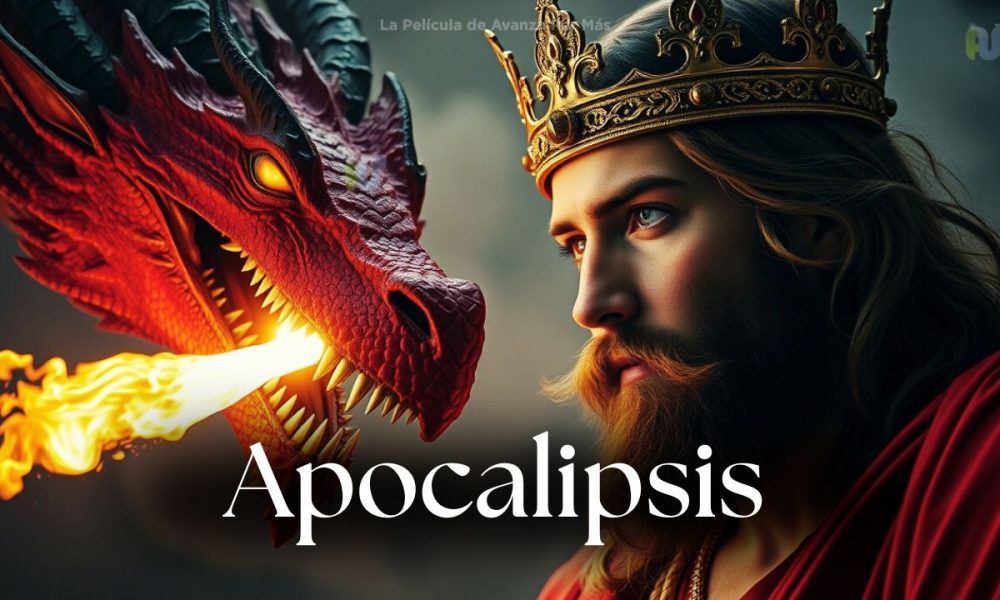
Artista: Funky Canción: Contigo – Álbum: Indestructible
Dirección: Pipe Orjuela Bustillo (@PipeOrjuela)
Realización: Chikorita Films
Producción General: María Camila Briceño
Dirección de Fotografía: Gillmar Villamil y Dairon Pérez
Asistentes: Claudia Ochoa y Juan Esteban Ramírez
Post Producción y Color: Manuel Monsalve / Still Standing Pictures
Actor: Alexander Alzate
Actriz: Abril Schreiber
Actriz (Niña): Isabella Orjuela
How Casinosforusdt Explains USDT’s Growing Role in Canadian Online Gambling
The Canadian online gambling market has undergone a significant structural shift over the past several years, driven not only by provincial licensing reforms but also by the accelerating adoption of cryptocurrency payment methods. Among these, Tether (USDT) — a stablecoin pegged to the US dollar — has emerged as a particularly compelling option for Canadian players. Unlike Bitcoin or Ethereum, whose values can swing dramatically within hours, USDT offers price stability that makes it functionally equivalent to holding cash while still retaining the transactional advantages of blockchain technology. This combination has made it attractive to a demographic that wants the privacy and speed of crypto without the volatility risk. Understanding how this shift is unfolding requires looking at both the regulatory environment in Canada and the specific mechanics that make USDT a practical payment instrument for online gambling platforms.
The Regulatory Landscape That Created Space for USDT
Canada’s approach to online gambling regulation is notably decentralized. Unlike the United Kingdom, which operates a single national licensing authority through the UK Gambling Commission, Canada delegates gambling oversight largely to individual provinces. British Columbia, Ontario, Manitoba, and Quebec each operate their own lottery and gaming corporations, and it was Ontario that made the most consequential move in April 2022 when it launched its regulated iGaming market under iGaming Ontario (iGO). This framework allowed private operators — both domestic and international — to offer online casino games and sports betting to Ontario residents under a licensing agreement with the Alcohol and Gaming Commission of Ontario (AGCO).
What the Ontario framework did not do, at least initially, was provide explicit guidance on cryptocurrency payment processing. The AGCO’s standards focused heavily on responsible gambling measures, anti-money laundering (AML) protocols, and game fairness certification, but the question of whether USDT or other stablecoins qualified as acceptable deposit and withdrawal instruments was left somewhat ambiguous. This ambiguity created a dual-track market: licensed Ontario operators tended to stick with traditional payment methods to avoid regulatory friction, while a parallel ecosystem of offshore-licensed platforms — many holding licenses from Curaçao, Malta, or Gibraltar — actively courted Canadian players using crypto-native payment rails including USDT.
The Financial Transactions and Reports Analysis Centre of Canada (FINTRAC) has progressively tightened its oversight of virtual currency businesses since amendments to the Proceeds of Crime (Money Laundering) and Terrorist Financing Act came into effect in June 2020. These changes required cryptocurrency exchanges and dealers to register with FINTRAC and comply with know-your-customer (KYC) and AML obligations. The practical effect for online gambling was that players using USDT on offshore platforms were often transacting through exchanges that were themselves subject to Canadian financial regulation, creating an indirect compliance layer even where the gambling operator itself was not provincially licensed. This layered structure has shaped how USDT gambling has grown in Canada — not through formal regulatory endorsement, but through a pragmatic coexistence with existing financial oversight frameworks.
Why USDT Specifically Has Gained Traction Over Other Cryptocurrencies
To understand USDT’s specific appeal, it helps to compare it directly with the alternatives available to Canadian gamblers. Bitcoin, despite being the most recognized cryptocurrency, carries exchange rate risk that makes it poorly suited to gambling contexts. A player who deposits 0.01 BTC when Bitcoin is trading at CAD 50,000 is effectively wagering CAD 500. If Bitcoin drops 15% during their session, their balance in fiat-equivalent terms has already declined before they’ve placed a single bet. Ethereum presents the same problem, compounded by variable gas fees that can make small transactions economically inefficient. These characteristics create friction that discourages casual players from adopting crypto as a primary gambling payment method.
USDT eliminates the exchange rate variable entirely. Because it is pegged 1:1 to the US dollar and maintained through Tether Limited’s reserve holdings — a mechanism that has been scrutinized but has functioned consistently in practice since USDT’s launch in 2014 — players can think in dollar terms throughout their gambling session. A deposit of 100 USDT is effectively a deposit of USD 100, and the withdrawal of 100 USDT returns the same purchasing power. For Canadian players, there is a minor CAD/USD conversion to consider, but this is a familiar calculation that most Canadians make routinely given the geographic and economic proximity to the United States.
Transaction speed is another concrete advantage. USDT operates across multiple blockchain networks, including Ethereum (ERC-20), Tron (TRC-20), and BNB Smart Chain (BEP-20). The TRC-20 version, in particular, has become popular for gambling transactions because Tron’s network typically processes transactions in under two minutes with negligible fees — often less than one USDT per transaction. Compare this to bank wire transfers, which can take three to five business days for Canadian players, or credit card deposits, which are increasingly blocked by major Canadian banks for gambling-related transactions following internal policy decisions by institutions like TD Bank and RBC. E-wallets like PayPal have also restricted gambling use in many jurisdictions. USDT on Tron fills a genuine gap in the payment infrastructure.
Resources that track and analyze this space, such as https://casinosforusdt.com, document how the availability of USDT across different gambling platforms has expanded year over year, reflecting both operator adoption and growing player familiarity with stablecoin mechanics. The data patterns visible in such tracking efforts suggest that Canadian players represent a disproportionately active segment of the English-language USDT gambling market, likely because of the banking restrictions that have made traditional payment methods less reliable for this use case.
How Platform Design and Bonus Structures Have Adapted to USDT Users
The mechanics of how online gambling platforms have integrated USDT reveal a more sophisticated adaptation than simply adding a new payment option to a checkout page. Operators targeting USDT users have made structural changes to their platforms that reflect the specific behavioral and financial characteristics of this player segment. One of the most significant adaptations concerns minimum deposit thresholds. Traditional casino platforms often set minimums at CAD 10 or CAD 20 to cover payment processing costs. With USDT on Tron, transaction costs are so low that platforms can economically accept deposits as small as 1 USDT, which has opened the market to players who want to test platforms with minimal financial commitment.
Bonus structures have also evolved. Early cryptocurrency casinos often excluded crypto deposits from welcome bonuses, treating them as a separate payment category. More recently, operators have begun designing bonus programs specifically around USDT deposits, including percentage-match bonuses calibrated in USDT rather than converted to local currency. This matters because it removes a common point of confusion: when a bonus is denominated in the same currency as the deposit, players can calculate wagering requirements and bonus value without dealing with exchange rate conversions that can obscure the true value of an offer.
Provably fair gaming technology, which uses cryptographic verification to allow players to independently confirm the fairness of game outcomes, has become more commonly paired with USDT-accepting platforms. While provably fair mechanics are not exclusive to crypto gambling, they are architecturally compatible with blockchain-native payment systems and have become a feature that USDT-focused platforms use to differentiate themselves from traditional operators. The underlying hash functions and seed verification processes allow any player with basic technical knowledge to verify that a game result was not manipulated after the bet was placed — a transparency guarantee that no conventional casino software currently offers.
Withdrawal processing represents perhaps the most practically important adaptation. Canadian players using traditional payment methods have historically encountered withdrawal delays ranging from 24 hours to several business days, depending on the method and the operator’s internal verification processes. USDT withdrawals, once approved by the platform, typically arrive in the player’s wallet within minutes. Some platforms have implemented automated withdrawal systems for amounts below a certain threshold — commonly 500 or 1,000 USDT — that process without manual review, further accelerating the timeline. For players who have experienced the frustration of waiting days to access winnings through conventional banking, this represents a material improvement in the overall gambling experience.
Casinosforusdt’s Analytical Approach to Documenting Market Trends
Understanding the USDT gambling market requires more than anecdotal observation; it requires systematic tracking of which platforms accept USDT, under what conditions, and with what terms. This is where dedicated analytical resources have contributed meaningfully to market transparency. Casinosforusdt approaches this through a methodology that evaluates platforms across several dimensions: the blockchain networks supported for USDT transactions, the minimum and maximum deposit and withdrawal limits, the licensing jurisdiction, the game library composition, and the specific bonus terms applicable to USDT deposits.
The licensing dimension deserves particular attention in the Canadian context. Because no Canadian province currently licenses operators specifically for USDT-based gambling, Canadian players using these platforms are by definition engaging with offshore-licensed operators. The quality and rigor of those offshore licenses varies considerably. A Curaçao license, issued under the Master License framework that has operated since 1996, provides relatively limited player protection compared to a Malta Gaming Authority (MGA) license, which requires operators to maintain segregated player funds, submit to regular audits, and participate in a dispute resolution process. A Gibraltar Regulatory Authority license occupies a similar tier of rigor to the MGA. Analytical resources that distinguish between these licensing tiers provide Canadian players with information they need to make informed decisions about which platforms represent acceptable counterparty risk.
Game library composition is another area where systematic analysis adds value. The major software providers that supply games to regulated markets — Evolution Gaming for live dealer products, Pragmatic Play for slots, NetEnt for both categories — have licensing agreements that restrict their games to operators holding licenses from approved jurisdictions. This means that some USDT platforms, particularly those with only a Curaçao license, may not have access to the full catalog of games available on provincially licensed Ontario platforms. Understanding which USDT platforms carry which software providers helps players identify whether a platform’s game library meets their specific preferences before committing funds.
The bonus term analysis conducted by resources like Casinosforusdt addresses a specific problem that has historically disadvantaged players: the gap between advertised bonus value and actual bonus value after applying wagering requirements and game contribution percentages. A 100% match bonus on a USDT deposit sounds straightforward, but if the wagering requirement is 50x and slot games contribute 100% while live dealer games contribute only 10%, a player who prefers live blackjack may find the bonus effectively worthless for their play style. Systematic comparison of these terms across platforms, expressed in consistent USDT-denominated terms, provides the kind of standardized information that allows meaningful comparison shopping.
The broader significance of this analytical work lies in its contribution to market efficiency. When players have access to reliable, detailed information about platform terms and conditions, they can make choices that better reflect their actual preferences and risk tolerance. This competitive pressure encourages operators to improve their terms to attract informed players, which over time tends to raise standards across the market. In a segment as new and rapidly evolving as USDT gambling in Canada, this informational infrastructure plays a role that traditional consumer protection mechanisms have not yet filled.
The trajectory of USDT’s role in Canadian online gambling reflects broader trends in both financial technology and regulatory adaptation. As provincial regulators continue to refine their frameworks — Ontario’s iGaming market is still relatively young, and other provinces including Alberta have discussed similar liberalization — the question of how stablecoin payments fit within formal licensing structures will eventually require explicit policy responses. In the interim, the practical reality is that a significant and growing number of Canadian players are using USDT to fund their online gambling activity, drawn by the combination of payment reliability, transaction speed, and privacy that no conventional payment method currently offers. The analytical and informational work being done to document this market, track platform quality, and explain the mechanics of USDT gambling to Canadian audiences represents a meaningful contribution to a space where informed decision-making has concrete financial consequences for real players navigating a genuinely complex landscape.