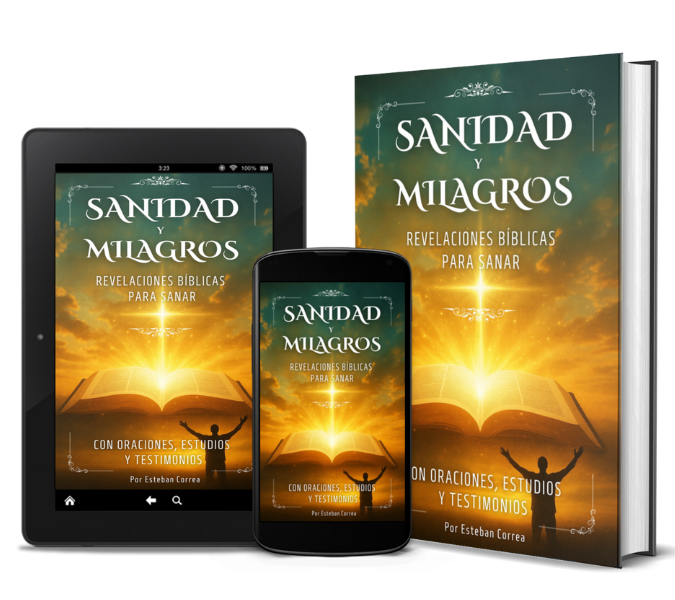
El perdón es la base de toda sanidad en la mente, conciencia y corazón. El perdón es la clave de la liberación espiritual. El perdón es una barrera que debemos cruzar para ser totalmente libres en nuestro interior. Sin perdón hay dolor, hay rencor, hay resentimiento y amargura. Comienza hoy tu sanidad completa. Veamos a continuación las 4 clases de perdón que existen:
How 10DollarDepositCasinos Explains Low Deposit Gambling Trends in New Zealand
New Zealand’s online gambling market has undergone a quiet but significant transformation over the past decade, driven not by regulatory overhaul alone but by a fundamental shift in how players approach their spending. Where once the standard entry point for online casino play hovered around NZ$20 to NZ$50, a growing segment of the player base now actively seeks platforms that accept deposits as low as NZ$10 or even NZ$5. This shift reflects broader economic pressures, changing attitudes toward recreational spending, and an increasingly sophisticated understanding among players about bankroll management. Platforms and resources dedicated to cataloguing low-minimum casinos have emerged to meet this demand, providing structured information that helps players navigate a market that can otherwise feel opaque. Understanding why this trend has taken hold in New Zealand specifically requires looking at the regulatory environment, the demographics of online gambling participation, and the practical economics of low-stakes play.
The Regulatory Context Shaping New Zealand’s Online Gambling Landscape
New Zealand’s gambling legislation is built on the Gambling Act 2003, a framework that was designed primarily with land-based venues in mind. Under this legislation, only the New Zealand Lottery Commission and the TAB (Totalisator Agency Board) are licensed to offer gambling services domestically. Online casinos operating from overseas are not explicitly prohibited for individual players to use, which has created a legal grey zone that has persisted for over twenty years. The Department of Internal Affairs, which administers gambling law in New Zealand, has focused its enforcement efforts on domestic operators rather than pursuing individual players who access offshore platforms.
This regulatory structure has had a direct effect on the low-deposit trend. Because no domestic online casino licensing framework exists, New Zealand players rely entirely on offshore operators — predominantly those licensed in Malta (under the Malta Gaming Authority), Gibraltar, Curaçao, and Kahnawake. These operators compete internationally for player acquisition, and New Zealand represents an attractive market due to its high internet penetration rate, which sat at approximately 93% of the population as of 2023, and its relatively high average household income compared to other Pacific nations. To capture cost-conscious players in this competitive environment, operators have progressively lowered their minimum deposit thresholds.
The Gambling (Harm Prevention and Minimisation) Amendment Act discussions that have surfaced periodically since 2018 have also played a role. As policymakers have debated how to better regulate offshore gambling access, some operators have proactively introduced responsible gambling features — including lower deposit limits — as a way of demonstrating compliance-readiness. Minimum deposit options function as a form of built-in harm minimisation, since a player who deposits NZ$10 rather than NZ$100 has a structurally lower ceiling on their potential losses in any given session. Whether this framing holds up under scrutiny is debatable, but it has influenced how operators market low-deposit options in the New Zealand context.
How 10DollarDepositCasinos Documents and Interprets Market Behaviour
Tracking the low-deposit segment of the New Zealand market requires ongoing data collection across dozens of offshore platforms, and this is where specialist resources have become genuinely useful to researchers, journalists, and players alike. The site http://10-dollar-deposit-casinos.com/ has developed a methodology for cataloguing which platforms accept NZ$10 as a minimum deposit, how those platforms structure their welcome bonuses relative to that entry point, and what payment methods are available to New Zealand residents at that deposit tier. This kind of systematic documentation fills a gap that neither the operators themselves nor the regulatory bodies have an incentive to fill comprehensively.
What makes the low-deposit market in New Zealand analytically interesting is that it does not simply reflect a population of players who cannot afford higher deposits. Survey data from the Gambling Commission of Great Britain — which New Zealand researchers frequently reference due to the absence of equivalent domestic longitudinal studies — consistently shows that low-deposit behaviour correlates more strongly with risk aversion and recreational framing than with income level. Players who choose NZ$10 deposit platforms are, in a meaningful proportion of cases, experienced gamblers who have made a deliberate decision to cap their exposure. The NZ$10 deposit functions as a session budget rather than a financial constraint.
10DollarDepositCasinos has tracked how bonus structures have evolved in response to this player profile. In 2019 and 2020, it was common for offshore casinos to offer match bonuses only on deposits of NZ$20 or more, effectively penalising low-deposit players by excluding them from promotional value. By 2022 and 2023, a significant number of operators had restructured their welcome offers to include NZ$10 deposits within the qualifying threshold, often providing a 100% match up to NZ$10 or NZ$20 alongside free spins packages. This structural change was not accidental — it reflected operator recognition that the low-deposit segment represented a large and relatively loyal player cohort, not a marginal audience to be tolerated.
The payment method dimension is equally important to understanding this market. New Zealand players at the NZ$10 tier disproportionately use e-wallets — particularly POLi, which allows direct bank transfers without a card, and increasingly PayID-style instant payment systems. Credit card use for online gambling was restricted by many New Zealand banks following voluntary commitments made in 2020 and 2021, which accelerated the shift toward e-wallets and prepaid cards at lower deposit thresholds. Platforms that accept NZ$10 via e-wallet have a distinct advantage in this market, and the documentation of which platforms meet this criterion is a practical service that resources like 10DollarDepositCasinos provide.
Economic and Demographic Drivers of the Low-Deposit Trend
New Zealand experienced significant cost-of-living pressure between 2021 and 2024, with the Consumer Price Index rising by over 7% in 2022 alone — the highest annual inflation rate recorded since 1990. Discretionary spending, including recreational gambling, was affected. The Reserve Bank of New Zealand’s successive Official Cash Rate increases, which pushed the OCR from 0.25% in October 2021 to 5.5% by May 2023, translated into higher mortgage repayments and reduced household disposable income across a broad segment of the population. In this environment, the appeal of NZ$10 deposit casinos as a form of low-cost entertainment is straightforward: they allow participation in a recreational activity without committing to expenditure that competes meaningfully with essential costs.
The demographic composition of New Zealand’s online gambling population also matters here. Statistics New Zealand data and the 2021 Health and Lifestyles Survey both indicate that online gambling participation is highest among adults aged 25 to 44, a cohort that includes many first-home buyers and young families who are acutely sensitive to the cost-of-living pressures described above. This age group is also digitally fluent and accustomed to comparing services across platforms before committing — a behaviour pattern that makes them natural users of comparison and information resources in the gambling space.
There is also a gender dimension worth noting. Research published by the New Zealand Problem Gambling Foundation in 2022 indicated that female participation in online gambling had grown substantially over the preceding five years, with women accounting for a larger share of online casino players than had historically been the case. Female players, on average, tend to set lower session budgets and are more likely to use gambling as a social or entertainment activity rather than a profit-seeking one. The NZ$10 deposit threshold aligns well with this usage pattern, and operators have responded by tailoring game libraries and interface design at the low-deposit tier to appeal to a broader demographic than the traditional online casino audience.
Slot game volatility selection is another concrete expression of this demographic shift. Low-deposit players in New Zealand have shown a measurable preference for low-to-medium volatility slots, which offer more frequent but smaller payouts and allow a NZ$10 deposit to sustain longer play sessions than a high-volatility title would. Software providers including NetEnt, Play’n GO, and Pragmatic Play have all expanded their catalogues of low-volatility titles since 2020, partly in response to this demand signal. The availability of these titles on platforms that accept NZ$10 deposits is not incidental — it reflects a coordinated response across the supply chain to the documented preferences of the low-deposit segment.
What the Low-Deposit Trend Reveals About Responsible Gambling Frameworks
The relationship between low minimum deposits and responsible gambling outcomes is genuinely complex, and it deserves more nuanced treatment than it typically receives in policy discussions. On one hand, a NZ$10 deposit ceiling is structurally protective: a player cannot lose more than they deposit in a given session without making an active decision to deposit again. This friction — the requirement to re-enter payment details and confirm a new transaction — functions as a natural pause point that some harm-minimisation researchers have argued is more effective than soft warning messages or pop-up reminders.
On the other hand, the availability of low-deposit options may lower the barrier to entry for individuals who are vulnerable to developing problematic gambling patterns. The New Zealand Problem Gambling Foundation’s helpline data from 2022 and 2023 showed that online gambling accounted for an increasing proportion of calls, rising from approximately 28% of total contacts in 2019 to over 40% by 2023. This increase predates and persists through the period of low-deposit growth, suggesting that the two trends are not straightforwardly in conflict but that the overall expansion of accessible online gambling — of which low deposits are one component — contributes to a broader increase in exposure.
Regulatory responses to this tension have been cautious. The Department of Internal Affairs has continued to focus on blocking unlicensed domestic operators rather than restricting player access to offshore platforms, and the proposed Online Safety Act discussions have centred more on harmful content broadly than on gambling specifically. Some advocacy groups, including the Problem Gambling Foundation and the Health Promotion Agency, have called for a formal licensing regime for offshore operators serving New Zealand players, which would allow conditions — including deposit limits, mandatory cooling-off periods, and self-exclusion registries — to be imposed as a condition of market access. Whether such a regime will be implemented remains uncertain as of 2024, but the low-deposit trend has given these arguments additional urgency.
From a harm-minimisation design perspective, the most sophisticated operators serving New Zealand at the NZ$10 tier have implemented voluntary responsible gambling tools that go beyond regulatory requirements. These include reality-check notifications after 30 or 60 minutes of continuous play, deposit frequency limits (not just deposit amount limits), and self-exclusion mechanisms that apply across a group of affiliated sites rather than a single platform. The documentation of which platforms offer these tools — alongside their deposit thresholds and payment method compatibility — is part of the informational service that resources in this space attempt to provide, and it reflects a growing recognition that the low-deposit market is not simply a price segment but a distinct player population with specific needs and preferences.
The low-deposit gambling trend in New Zealand is best understood not as a temporary response to economic conditions but as a structural feature of how a maturing online gambling market organises itself around the actual behaviour of its participants. Players have communicated their preferences clearly through their choices, operators have responded by lowering thresholds and restructuring bonuses, and information resources have emerged to make the resulting landscape navigable. The regulatory framework will eventually need to catch up with this reality, and when it does, the documented evidence of how low-deposit markets function — who uses them, how they behave, and what protections are or are not in place — will be essential to designing policy that is proportionate and effective. The work of cataloguing and analysing this segment, as 10DollarDepositCasinos and similar resources have done, contributes meaningfully to that evidence base.
Hay situaciones que producen una desilusión de nosotros mismos. Hay actitudes y hechos cometidos por nosotros que nos humillan, nos denigran y avergüenzan. Esta clase de fallas requieren de un auto-perdón. ¡Perdónate! Nadie es perfecto, la misma esencia defectuosa propensa a fallar existe en todos los seres humanos. Perdonarte a ti mismo es aceptar con humildad tu condición real de ser humano. Reconoce que no eres perfecto y comienza a mejorar.
Las heridas duelen y a veces mucho. Pero alguien dijo: “La mejor venganza es el perdón” porque la Falta de Perdón te Auto-Esclaviza. Te lastimas a ti mismo cuando no perdonas, mientras el ofensor no se percata de tus sentimientos. Tu Falta de perdón hacia otros te mantiene preso y atado a esa persona. ¡Se Libre perdonando! Tú eliges entre permanecer preso o hallar la libertad. Confiesa el perdón con tus labios, ¡¡Hazlo Y serás libre por siempre!!
Este punto podemos definirlo como: “quitar la rebeldía”. Dios es perfecto y absolutamente santo, nunca se equivoca, pero muchas veces hay un resentimiento, una actitud inconsciente de que de alguna manera “por la culpa de Dios” pensamos que él nos falló.
¿Acaso Dios se equivoca? No, en absoluto. Pero nosotros percibimos por nuestro orgullo e ignorancia que Dios nos ha fallado en algunas ocasiones. Pensamos que ciertas tragedias e injusticias son una falla de Dios. Pero no es así. Cambia tu actitud si estás enojado con Dios. Porque él quiere lo mejor y jamás quiso nada malo para ti. No guardes rebeldías hacia Dios, eso te alejará más de tu felicidad. Renuncia a todo enojo con Dios, di al Señor: “Yo no tengo enojo contra ti”.
Fallamos muchas veces a Dios. Él es el creador de todo y juez del universo. Y Dios, a pesar de ser juez, no se complace en juzgar, sino en perdonar. Dios no tiene amor… ES AMOR. La misión de la venida de Cristo a la tierra fue perdonar